How Timesheets Work
A timesheet is the record of the hours each employee actually worked. In Microkeeper, hours come in as staff clock on and off, or from managers and the roster. You check them against the roster, approve them, and the pay run pays them.
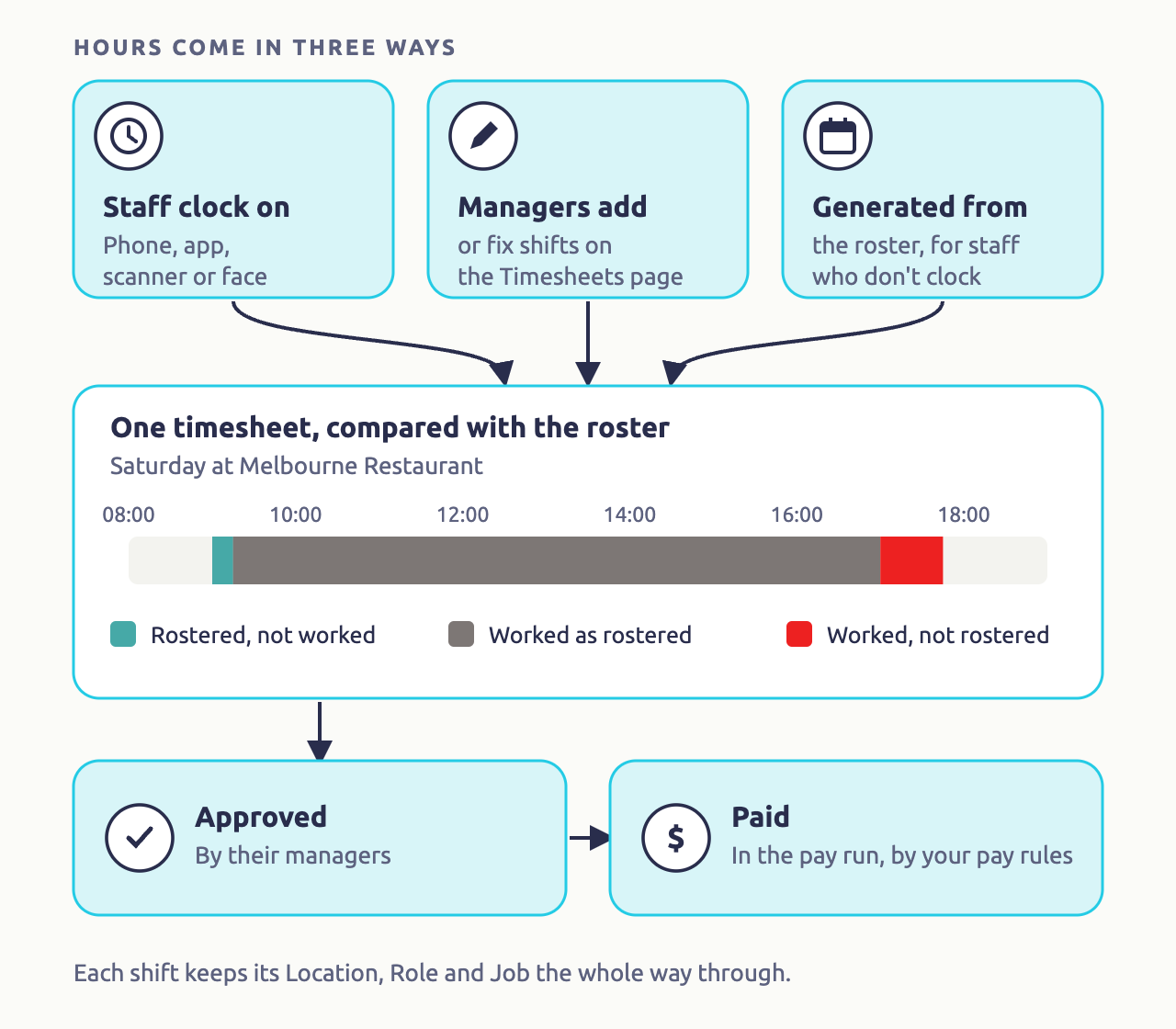
Timesheet workflow in Microkeeper
Record the hours
Hours come in three ways.
- Staff clock on and off by phone, the Microkeeper app, a scanner or a facial recognition iPad. See Clocking Options.
- Managers add or fix shifts on the Timesheets page.
- For staff who don't clock, shifts are generated from the roster. See Timesheet from Roster.
Review the shifts
Check the hours before they're paid.
- Compare each shift with the roster to spot late starts, overtime and missed shifts.
- Fix any that are wrong, and add the end time to any shift left open.
- Approve them. See Approve Timesheets.
Process them in the pay run
Approved hours become pay.
- The pay run pays the week's approved hours, using your pay rules for penalties and overtime. See Run a Pay Run.
- Each shift keeps its Location, Role and Job, so you can see what each costs. See Cost Centres.
Time and attendance guides
Clocking Options
Choose how each employee clocks on, and where clocked shifts get their Location, Role and Job.
Facial Recognition
Set up an iPad so staff clock on by face.
Fingerprint and NFC
Clock on at a PC with a fingerprint scanner or NFC tag.
Timesheets
Check, add, change and import shifts against the roster.
Approve Timesheets
Approve shifts before the pay run, by hand or automatically.
Timesheet from Roster
Turn the roster into timesheets for staff who don't clock.
What timesheets rely on
- Rosters: what each shift is compared with, and where generated shifts come from.
- Locations: where staff can clock on, and which managers see their shifts.
- Managers and Access: who can see, change and approve each employee's shifts.